Embracing the Spirit of Unity

The Importance of School Sports Days to the BGS community  

This week, Assistant Head, Mrs Axford, guest writes on the Headmistress blog about community spirit of Sports Day events.

Last Tuesday, at about four o’clock in the afternoon, with the cheers of the last relay still ringing in my ears, I got back to my office after senior sports day was over. The students of Hepburn, one of the six Houses that make up the BGS community, had been crowned overall winners.

Now that everyone was all back in Cardington Road again, I thought that perhaps those of us wearing the red shirts of Austen might be crestfallen, and the purple Chanel’s, and the green, yellow and orange teams of Nightingale, Franklin and Parks feeling perhaps defeated. But as BGS students and staff prepared to head home that afternoon, defeat was far from the mood. The whole school was abuzz. The energy and excitement were palpable. Everywhere there were bright eyes and happy smiles. 

And I paused as I tidied my desk, to think why that was, and why events like these mean so much to school life.

A community event like school sports day is something to cherish: a golden moment in the busy school calendar when, for once, everything stops and everyone comes together – not just for twenty minutes in a whole school assembly, but joins together, with a shared focus, for a whole extended afternoon. Especially in an era dominated by technology and screens, where social connections can often feel distant, I think the significance of sports day is huge. 

And what is the winning formula to a successful sports day? One that leaves everyone energised, and has made everyone smile, as it did last Thursday? 

Sunny weather helps of course. Other things also play a part: we are very fortunate to be able to host our sports days at the athletics track. To be able to walk from school makes it feel like such a natural transition for the whole community. And everyone was energised by ice creams; thank you to the PTA, The Association, for providing these, another key ingredient of course to ensuring a successful event!  

But I believe the heart of the success of sports Days at BGS lies in the way our school House system works. The premise for everyone is built around their House winning the Sports Day Cup. And the fact that all students – and all staff – are placed in one of our six Houses, means that there is shared interest and engagement across the entire school community.  

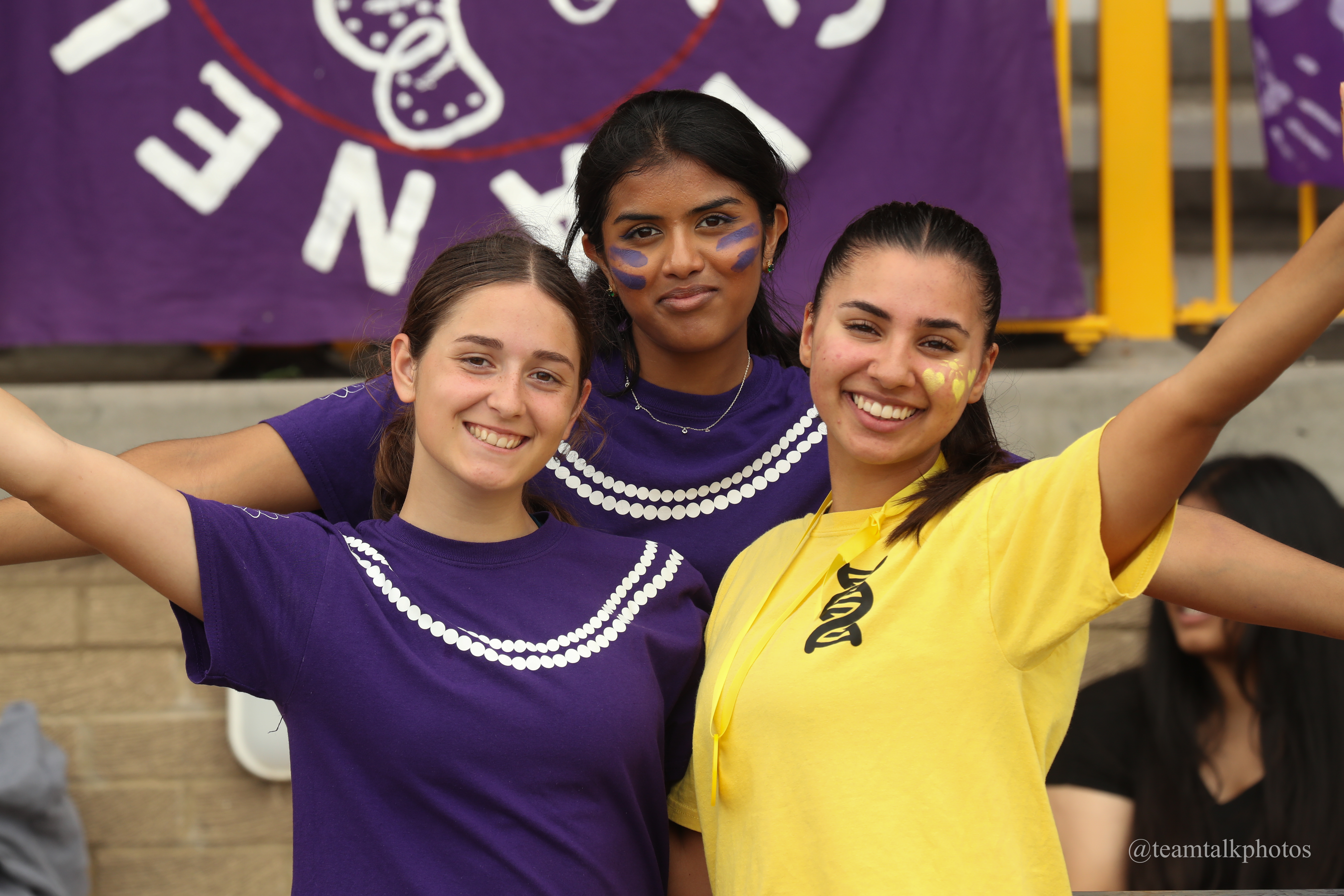
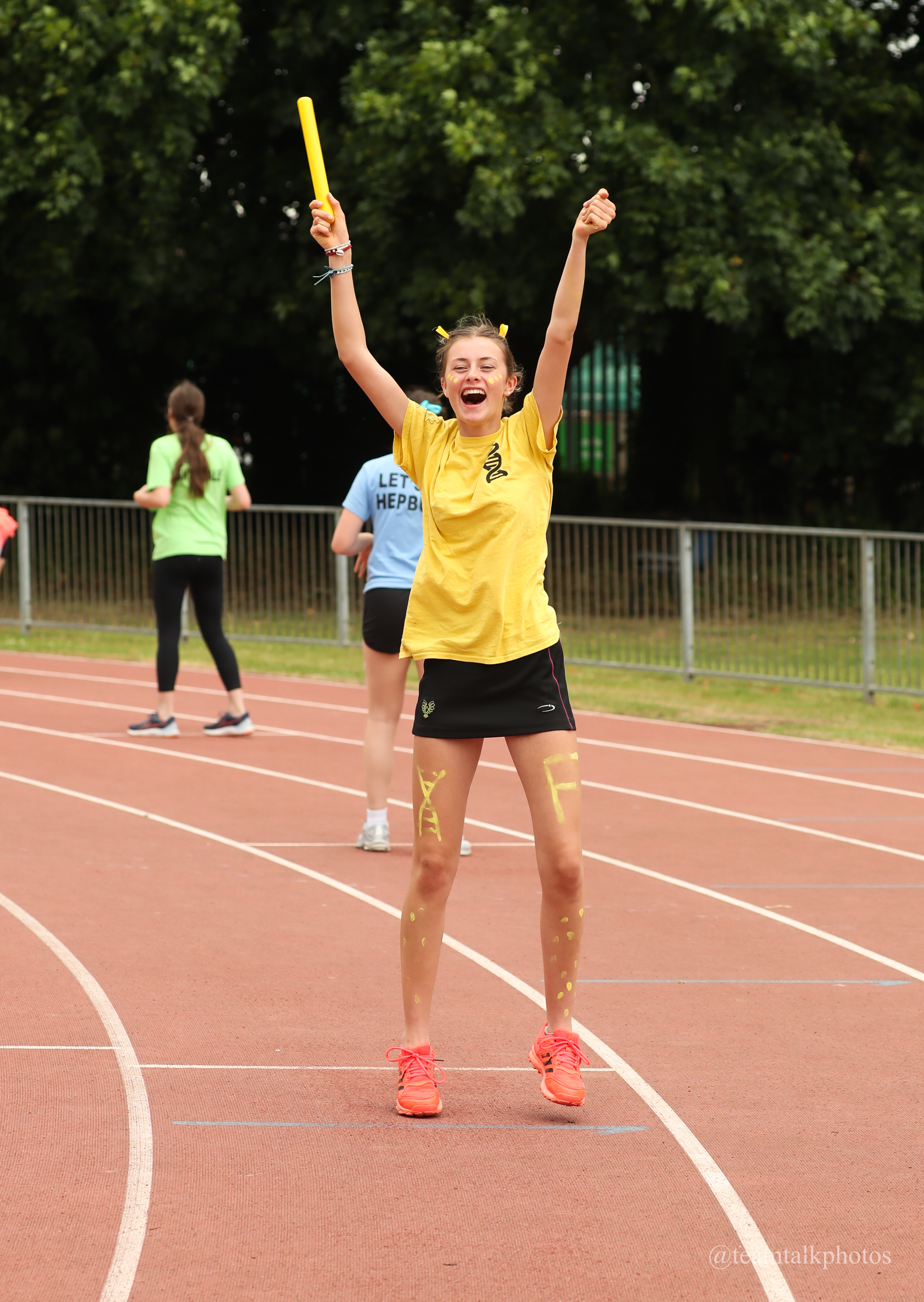
And last Thursday, what strength of engagement there was! On the morning, the school was a sea of colour, with everyone in House T-shirts, and the smell of face-paint hitting you, from the hundreds of colourfully striped faces. As the day unfolds, there are moments of brilliance – the look of sheer joy and surprise when someone who never expected to win crosses the line first! The sound of the bell as competitors approach the final lap, and there are the bags of effort expended in every race! Records are broken – fewer each year now BGS is in its second decade, and it gets harder to beat the many who have come before… As the Day moves towards its conclusion, the relays bring each year group leaping to their feet out of the stands. The joy of the last-leg winner as they cross the line! And that joy again as the rest of their team appear from different corners of the track, all coming together in huge hugs as they are awarded their medals! And as the runners in the final  senior relay came round the last bend, there was the most almighty sound of cheering from the stand, with the whole of the senior school and staff up on their feet, the entire community united.

Of course, only one House can win the day. So yes, as everyone walked back to school, you might think that 5/6ths of the school community would be, perhaps, downhearted. But the corridors were full of energy and excitement and smiles. These smiles and the energy and excitement have come because the students have loved being part of a team – their House team – and have loved being a part of something so much bigger than themselves, a community, a big, happy, strong, caring, cohesive and meaningful community. The power of BGS community is something for us all to enjoy, and to shape, and to treasure.

And for a fortunate few, the anticipation of reliving it all doesn’t require a year-long wait! Brace yourselves as the Junior Sports Day arrives on Thursday 6th July, 12:30-3:45 pm. Join us and create unforgettable memories together!

Transition – Embracing new beginnings

This is the time of year I love best. The warm, balmy weather always fills me with joy, but I also enjoy the anticipation and excitement as we prepare to welcome new students into our vibrant and caring school community. Transition events hold a special place in our hearts, as they mark the beginning of an incredible journey for these young minds. 

At Bedford Girls’ School, we place great emphasis on creating a warm and inclusive environment for all our students. We believe that the first step towards fostering a sense of belonging is to ensure that every new student feels welcomed and valued from day one. Our transition events are carefully designed to create opportunities for incoming students to meet their peers, form friendships, and begin building a support network within the school community.

Transition events are not just about helping new students adapt to their new surroundings; they are also about celebrating the excitement that comes with change. We prides ourselves on embracing innovation and preparing our students for the rapidly evolving world. Welcoming new students provides us with an opportunity to infuse fresh perspectives, diverse talents, and unique experiences into our community, enriching the educational journey for all.

We  understand that a successful transition is not solely about academic adjustments but also encompasses social, emotional, and personal growth. That is why we have developed fun events that cater to all aspects of a student’s development. Our Welcome Events are designed to equip new students with the skills and confidence they need to thrive in our nurturing environment.

As we gear up for the arrival of new students in September, the atmosphere at our school is filled with the buzz of high hopes we all experience with new beginnings . The beauty of the transition period lies in the shared journey that we embark upon together. Our dedicated teachers, pastoral staff and parents collaborate to ensure that every student feels seen, heard, and valued. It is a collective effort to create an environment where new students can flourish and reach their full potential.

As Headmistress, I cannot help but feel an overwhelming sense of pride and excitement as we prepare to receive new students to Bedford Girls’ School. We are eager to open our doors and extend a warm welcome to our new students, who will undoubtedly add their unique talents to the fabric of our school community.

I’d like to finish by addressing our incoming students directly: Welcome! We cannot wait to see your growth, celebrate your accomplishments, and support you every step of the way. Take inspiration from the words of American actress, Josie Bissett, “Dreams come a size too big, so that we can grow into them”. I am very much looking forward to seeing you realise your dreams here at Bedford Girls’ School.

Embracing the Future

The Augmented Teacher and the Power of AI in Education

This week, BGS Director for Digital Learning, Enterprise and Sustainability, Mrs Hudson-Findley, shares her insightful thoughts on the exciting journey of integrating AI into education, encouraging us all to embrace its boundless potential.

The educational landscape has been quietly changing, evolving, and adapting to our technology-driven society. We have seen a number of rumbles in EdTech and Cloud Computing that have led to a more paperless environment. Yet, compared to the swift and transformative disruptions experienced in fields such as healthcare, transportation, and finance, the education sector remains a relatively untapped frontier. Artificial Intelligence (AI) in education is poised to change all of that. We are at the beginning of one of the most exciting periods in education to date. The potential to positively enhance a student’s learning has never been greater than it is now.

AI can significantly enhance teaching and learning experiences in a myriad of ways. For instance, AI-powered adaptive learning systems can create personalised learning paths for each student. These systems assess individual strengths, weaknesses, and learning styles, customising content delivery accordingly. This approach improves learning outcomes and engagement significantly (Woolf, 2019). Furthermore, AI can take over administrative tasks, freeing educators to focus on instruction and student interaction. This increased efficiency is a boon to our often-overburdened teachers (Luckin, 2018).

Moreover, embedding AI in education serves a dual purpose of preparing students for a technology-fuelled future. It’s no secret that tomorrow’s workplaces will demand a high degree of tech fluency. Integrating AI into our teaching practices not only potentially makes lessons more engaging and effective, but it also gives students first-hand experience with AI, equipping them with essential future-ready skills.

However, the integration of AI into schools is not without concerns. A significant concern involves data privacy. AI systems rely on large amounts of data to function effectively. It’s vital to implement robust data protection measures to safeguard against any potential misuse. Regulators, schools, and AI providers must work closely to ensure such measures are in place and effectively communicated to all stakeholders (OECD., 2018). At BGS, we have developed guidance for teachers to refer to when using Generative AI tools. Using the methods and approaches outlined in our staff training sessions and Academic Honesty Policy appendix, which is specific to AI tools, teachers and students will have the confidence to use these tools safely and ethically.

There’s another aspect to consider; the potential over-reliance on AI, and a consequent atrophy of human intelligence (HI). In a world increasingly mediated by AI, we need to ensure that our students don’t lose sight of the inherent value of human metacognition and emotional intelligence.

Human metacognition, the awareness and understanding of one’s own thought processes, is a critical component of effective learning. Emotional intelligence, encompassing the ability to identify, use, understand, and manage emotions, is just as crucial in fostering positive interactions and relationships. With the use of AI, there’s a risk that learners might lean too heavily on the machine’s intelligence, bypassing opportunities to develop their own metacognitive and emotional skills.

At BGS, we are mitigating this by developing guidance and training for teaching staff on how to blend AI and HI in their teaching practice. While AI can provide personalised learning paths, teachers supplement this with strategies to promote self-reflection, critical thinking, understanding of potential bias and inaccuracies in the results the tools produce, in addition to emotional awareness.

By consciously weaving elements of metacognition and emotional intelligence into lessons, we can equip our students with a balanced set of skills, ensuring they’re ready not just to use AI, but to collaborate with it. This approach ensures we’re raising a generation of learners who can leverage AI’s power without losing their human intellect’s richness. AI in education should always be viewed as a tool that enhances human potential, never as a substitute for it.

The final concern to address is the fear that AI might replace teachers. However, this apprehension is totally unfounded – teachers are here to stay! AI tools are designed to support, not supplant, human teachers. Education is an inherently human endeavour, centred on relationships, empathy, and understanding. These qualities cannot be replicated by AI. Instead, we should view AI as a tool to enhance the teacher’s role, not eliminate it – this is exactly how we are viewing AI in education. We believe that AI in the hands of our subject specialists is like acquiring a new superpower.

The time has come for educators to embrace the disruptive power of AI and to leverage its capabilities to enhance their teaching practices. While the concerns are valid, they are not insurmountable. With the right planning, policy measures, and a willingness to innovate, we can harness AI to create an educational experience that is more personalised, engaging, and future-proof than ever before. As stakeholders in this transformative journey, let us welcome the dawn of AI in education and embrace its potential to shape our children’s futures.

References

Woolf, B. P. (2019). Building Intelligent Interactive Tutors: Student-centered Strategies for Revolutionizing E-learning.

Luckin, R. (2018). Machine Learning and Human Intelligence: The Future of Education for the 21st Century.

OECD (2018). Bridging the Digital Divide: Including all learners in the digital era.

The Gender Imbalance in Tech   

This week I have been out of school for a few days. Being away from school is always a dilemma for a Head as the school term moves at such a pace. However,  spending quality time out helps broaden perspectives, build new connections and provide periods to reflect. This week has definitely provided all of those opportunities.

I started the week chairing the ISPN conference, which brought together school leaders to discuss some of the challenges and opportunities the sector is facing. For me, one area of particular interest was the role of technology in the future of education. We heard from a range of incredible experts, including our own Mrs Hudson-Findley, who spoke passionately about how technology, used with intelligence and insight, can transform the classroom and build the skills our young people will need. We shared best practice as we discussed the different stages schools were at on their digital transformation journeys. It was invigorating to recognise just how advanced BGS is both in our strategic approach and the application of tech into our teaching and learning. 

Technology related industries are the fastest growing economic sector; we must ensure that our young people are digitally fluent, agile, understand emerging media and are transdisciplinary thinkers to flourish in the world that they will step into. Many of the jobs they will have will be in the so called 4.0 industries and all will rely on technology to facilitate their working day.    

However, I am stunned by the gender imbalance in the tech sector. The World Economic Forum in 2020 reports that women account for only 22% of the tech workforce. Shockingly, according to the Higher Education Statistics Agency (HESA), the percentage of students enrolled in a computing degree course at university in 2020/21 who were female was only 21. What is even more worrying, according to the British Science Association, is that currently the number of girls studying computing is actually declining. A decade ago girls made up 42% of the ICT GCSE entrants; not quite equal, but not far off. Fast forward to 2017 and that figure had dropped slightly to 39%. But by 2022 the percentage was in freefall at only 21%.  

When you start to look a little deeper you realise that social, educational and cultural issues play a huge part in facilitating this gender imbalance. Traditionally, tech products have been designed by men, for men; the research and data collection has been carried out on men. The size of a mobile phone and a computer keyboard are designed for a male handspan; whilst voice assisted technology is over 70% more likely to respond to a male command. Equally, very few women hold senior leadership roles in the tech sector and there is evidence of a significant gender pay gap. A survey by PWC stated that out of 2,000 students 78% could not name a female role model in tech.   

Unless we address these issues young women run the risk of being shut out of a huge global sector before they even reach the age of 20.           

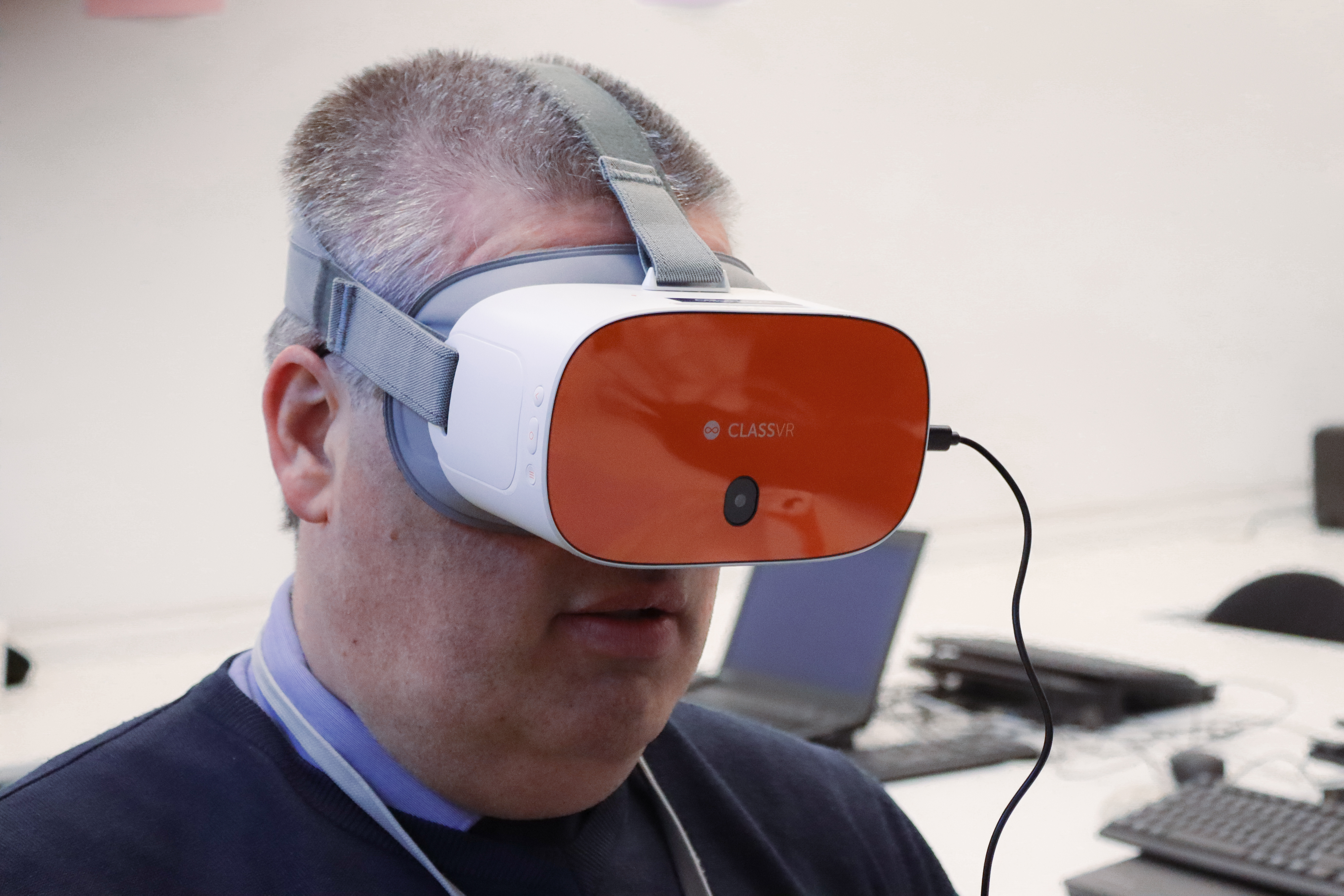
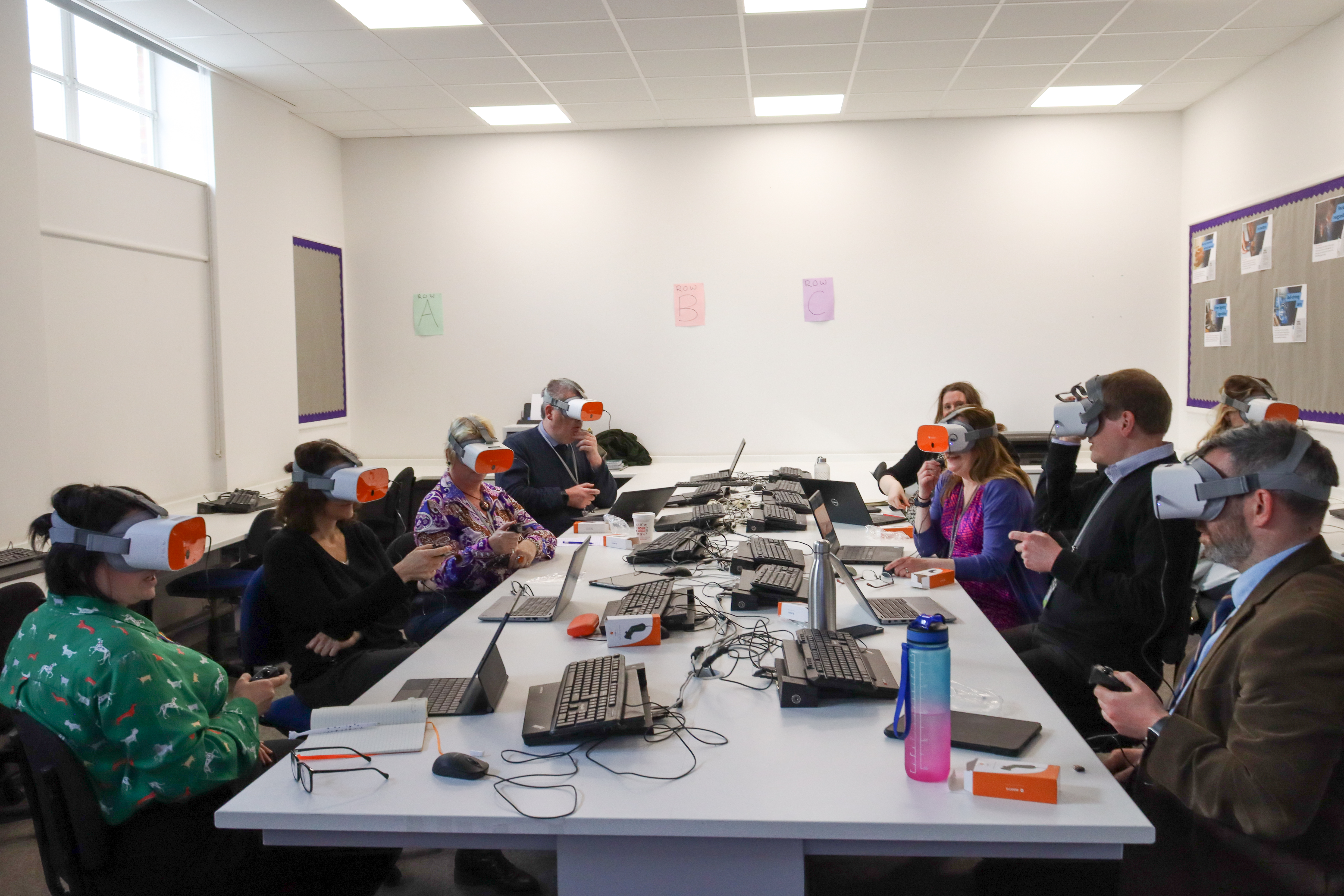
At BGS all of our students are digitally fluent; all have access to coding, robotics, virtual and augmented reality; they opt to take computer science at GCSE and continue to study it as part of the IB Diploma programme. There is no gender stereo-typing. At BGS girls lead the tech societies, girls enter tech competitions, they are all introduced to female scientists, talk to female engineers and female tech specialists. They are building the skills and knowledge from day one and are always encouraged to pursue their dreams. Our approach teaches our students that they are the innovators and that they should utilise the technology at their fingertips to facilitate their ideas. But our students are the lucky ones, sadly this is not replicated across the education sector.  

As school leaders we need to work collectively to overcome this systemic challenge; we have a responsibility to champion all girls in all schools to ensure they have equal access to an education which inspires them to pursue careers in tech. I was pleased that we were given the opportunity to share what we are doing, so we can collaborate and support other educators as we build an equitable future for our young people. To me this was time out of school well spent.        

Friendships and Belonging

This week, BGS Deputy Head, Ms Teale, guest writes on the Headmistress blog about friendships and how at BGS we work hard to make our curriculum inclusive, engaging and relevant to the young people.

I was asked recently what I thought young people needed in order to thrive at school. I could come up with a list of things: great teachers, supportive parents, a network of friends, modern facilities, extra-curricular clubs, a range of sports, music and drama opportunities, and all of the other things that we can offer our students as part of a holistic education. My feeling, having worked specifically in the sphere of pastoral care for girls during my eight years at BGS, is that what young people really need to feel if they are to thrive is that they belong. In the curriculum, they should be able to see people like them, feeling like they do, doing ordinary and extraordinary things. At BGS, we are working hard to make our curriculum inclusive, engaging and relevant to the young people in our care so that it acts not only as a mirror where they see themselves, but also acts as a window where students can see into the lives of others..

But fundamentally, my belief is that it is the relationships that students form in school that enable them to feel that they belong. Some students find their tribe seemingly easily, for some the journey is much more bumpy until they find someone or a group with which they “click”.

What is clear is as girls move through adolescence they may well experience problems with friendships at some point; it is a very normal part of growing up. The extent of problems will vary, some will struggle to make friends or keep friends, they might feel left out, or they might struggle to move away from a friendship as their interests and levels of maturity change. This last one is particularly difficult, as an adult we have a number of strategies to manage our  friendships. This isn’t easy for a student at school where friendships exist in elaborate networks. Typically in a school community they will continue to be around each other most of the time so how does a girl navigate distancing from a friend without ever being mean or losing a wider group?There are strategies we can use to help coach our daughters, and our students through these situations.  

Bedford Girls’ School is the first girls’ school I have worked in and what struck me very soon after joining, was the strength and closeness of the friendships I observed between students. This is a wonderful benefit of being in an all girls environment, the level of support they provide to each other; the empathy, care and attention they give to each other builds confidence and a sense of security. They grow up in a safe inclusive environment, with a team of experienced adults around them who are experts in working with girls. Regardless of single-sex or co-ed settings, the relationships between girls are different to those formed between boys which are possibly not so grounded in closeness and confidentiality. In Andrew Hampton’s book When Girls Fall Out (a highly regarded expert who we are excited to be hosting next year at BGS), the author asks us to understand that every girl must have at least one friend. Girls’ identities develop through their friendships so when these friendships are threatened, girls can experience panic and insecurity.

Young people can fall out over things that seem trivial to the adults in their lives, however, us adults view issues with years of experience and we’ve built up resilience and self-knowledge. We should avoid trivialising or immediately trying to fix the issues our daughters bring us. As a girl grows up, the ability of an adult to intervene successfully when friendship issues arise diminishes. Adult involvement can be interfering rather than supportive and can actually escalate an issue. We need to validate their feelings “that must have been hard for you” and just listen carefully for the emotion and ask how it made them feel. Ask them whether some gentle feedback would be helpful for the person they are having a problem with and help them to see other perspectives on an issue. It is hard for a parent to see their daughter go through hard times, experiencing things that parents can’t easily fix. Empathise deeply, be curious, ask your daughter how these things play out at lunch, ask her whether there are times when it’s OK. We can support through listening, asking questions and helping them to arrive at their own solutions. The more we understand, the better the guide we can be. 

Relaxation and revision: finding a balance

This week, BGS Director of Sixth Form, Mrs Woolley, guest writes on the Headmistress blog about striking the perfect balance ahead of the busy summer exam season.

For most of us this time of year is a delight, bringing longer days, lighter nights and better weather. In Sixth Form, particularly for the Upper Sixth students, it is a challenging time. IB exams have already started and A Levels loom and whilst all students are keen to do well, the added pressure of achieving grades in order to secure university places is incredibly daunting for our young people. Recent alumnae attest that Sixth Form study is significantly more intense than university study as a result of this. 

Not being certain of where you will be spending your next three (or more) years can be unsettling and our pastoral team are always here to support our students. I am always impressed with the determined, mature and open-minded approach our students are able to demonstrate as they enter the examination period. 

Our Upper Sixth cohort have been on a steep learning curve over the past two years. They have managed the transition to the independence and self motivation of Sixth Form study, setting them up for success at university, apprenticeship or the workplace. They have learned new approaches to learning and managing their time alongside developing leadership skills, navigating friendships and relationships as well as building resilience from the regular triumphs and disappointments of their academic journey. 

They have been incredibly busy in the Sixth Form; mentoring younger students, developing super curricular knowledge, running activities, coaching sport, attending and giving lectures, facilitating and driving projects, leading teams, setting up clubs and societies alongside their IB or A Level subjects and for some a part time job.

Now is the time they put a number of those things to one side for a short time as they go on study leave, to maximise their revision and exam preparation using key guidance staff have shared and practised with them throughout their two years and here would be my top tips:

  • Plan ahead: write a clear revision schedule in a calendar format identifying which subjects and subtopics they intend to cover at which times of the day. This ensures students can cover all the material before they sit the paper and no last minute cramming, which is of course not an effective way to revise. It’s important they stick to this and share with yourself, siblings or a friend!
  • Past papers and examiners reports: Ensure that once a student feels confident they know the material, it’s important that they incorporate past paper practice into their revision schedule. Marking their answers carefully and adding to their notes or revision cards the nuances they may have previously missed and key terminology that examiners are looking for. If they don’t perform well on a topic, then make sure they go back and revise this. In order to learn more from students’ previous mistakes and gain more insight into what the examiners are looking for. Reading the examiners reports for the papers completed is also incredibly useful, particularly in areas where they are consistently dropping marks.
  • Active revision: we have had additional tutorial and small group sessions for students on auditing their knowledge and using reliable revision techniques and modelling these. Not simply reading or copying material, but dual coding and fully engaging with the material by changing it in some way. Taking prose and converting into bullet point notes and then purely essential key terms, changing a table into a diagram or prose and focussing on measuring the success of revision, not purely by the length of time spent revising, but how knowledge and understanding has improved at the end and testing this with past paper questions. Thus ensuring the investment in revision is effective. The pomodoro technique can also help here where revision is broken down into four intensive 25 minute sessions, perforated by a 5 minute break and then a longer break at the end of this cycle. A number of students who have recognised they are procrastinators have found this particularly useful.
  • Sufficient revision, with down time built in: every year when I have conversations with students following their mock examinations the definition of ‘a lot of revision’ varies hugely. Depending on the subjects studied there will always be variation, but unfortunately for most students a couple of hours a day across all subjects is not sufficient to learn and practise in terms of the detail and sophistication needed to score top grades at IB and A Level. That said, students do also need to have breaks throughout a revision period and it should be perforated by periods of time off to relax, meet friends, read, exercise or just watch TV, so they can look forward to this. The most successful students build this into their original revision plan too.
  • Phones away: For most young adults they are never further than 10cm from their mobile phone, but to avoid distraction when a message or notification pops up and the temptation to look at all the exciting things it appears others are doing -that are not revision! The best thing is for phones to be away in another room until it is time for a break.
  • Here and now: During the revision period it can also be a good idea to focus on one day at a time. Rather like running a marathon, focus on each mile at a time and consider how far you have come, rather than how far is yet to go. 
  • Finally, Muddy Stilettos have put together a really useful ‘How to boss your revision’ blog, which features BGS Lower Sixth IB student, Emily Pinkney. Read it here

When students incorporate this guidance they will be equipped to give their individual best performance. They will have done their best and we can ask no more!

All that remains is to wish them the very best of luck, as staff we are deeply invested in their success and hope they are able to attain the results they deserve and entry to a course, apprenticeship or job which will fulfil and enthuse them. Providing that next step to wherever their future careers may take them. The world is their Oyster and we look forward to hearing about their adventures.

Women Supporting Women

Last week we held our London alumnae drinks in the offices of one of our alumna, Helen Wood (née Smith, BHS 1989), in the wonderful Covent Garden. This was an invigorating evening with alumnae sharing the stories of their own cherished school days, but even more importantly sharing their career experiences with one another. It was a fantastic example of “women supporting women” across the generations: from those who have forged high profile careers; to those 10 years in; and to those who are still at university. The old boys’ network has been around for generations, so it is lovely to see our alumnae sharing their wisdom with each other and encouraging their younger counterparts to be as ambitious as they have been.

London Alumnae Drinks event

Sadly the gender pay gap widened to 14.4% as reported in March 2023 (an impact of Covid and childcare costs) and that even pre-pandemic female graduates experienced a 7% pay gap one year after graduating, which grew to 24% after 10 years. Gender stereotypes about interests start early and cause gender disparities in the number of students taking subjects such as computer science and engineering. Stereotypes still persist that portray men as more brilliant or more inherently talented than women. Even in literature boys and girls prefer to write stories with male protagonists; at age 5, 70% of characters created by girls were female, but this falls to less than half by the time they reach 13. It is imperative we challenge these misconceptions and stereotypes, and that we have networks of women who can do this whilst nurturing and challenging younger generations not to accept the status quo.

Shortly before the Easter break, during the week of International Women’s Day, I was extremely fortunate to attend the Think Women event at the Institute of Directors, where a group of like minded individuals discussed the importance of international experience in a woman’s career and what barriers exist which limit  women taking up these opportunities. I have been very fortunate to travel, live and work all over the world, and understand what benefits that has brought to my career and more importantly my ability to empathise, understand a range of perspectives and think in a different way. Though I also understand the difficulties of being a young woman travelling alone in certain parts of the world and latterly trying to move a young family halfway across the globe. We need to do more to support women to ensure they can seize opportunities when they arise and take on new challenges which push themselves out of their comfort zones.

As part of the conference, it was inspiring to hear from Dr Anino Emuwa, global women’s leadership expert and founder of 100 Women @Davos. Her advice for the next generation was as follows. Make sure you are visible; catch the attention of those who make the decisions. You want to be on the tip of the tongue of those who have influence, so when they are asked they say “I know just the person”. Make use of sponsors who can help you with your career. Articulate clearly your value and purpose; and communicate that well with others via the appropriate platforms. Try to summarise your unique value point into one sentence. You need to be creating content and don’t just communicate what you are doing now, but also where you are going. Finally, many opportunities arise through word of mouth, so get out there and network. We are so lucky here at BGS, to have such a wonderful group of alumnae who can help with so much of this from mentoring, to work the room events, to inspirational talks, to just being there for a quick conversation about degree courses or career aspirations. I am very much looking forward to seeing this community grow from strength to strength as each generation is here to support the next. 

As Carla Harris, one of the most powerful women on Wall Street, said: “Nobody makes it alone. And it doesn’t matter how smart you are or how hard you work, somebody will have to carry your paper into the room because every major decision about your career from your promotion, to your compensation, to your assignments are made in a room behind closed doors where you are not present.” So I urge all BGS students to take this with them: seize the support from your teachers, parents and our alumnae as you start your journey, but make sure you give back once you’ve made it.

Supporting our students to succeed 

This week, Mrs Hooley, Assistant Head guest writes on the Headmistress blog about how we support our students during examinations and assessments. She also reflects on some excellent strategies which were highlighted by our Head of Learning Support, Mr Williams during this week’s Curriculum Conversation. 

Young people continue to be impacted by the after effects of the pandemic, whilst the practical restrictions to their lives may have faded from memory the consequences to mental health and well-being are being seen globally. Sapien Labs, a non-profit organisation undertook their third annual mental state of the world report with 400,000 participants across 64 countries and recognised that the mental health quotient for young people has remained at the same level as 2021. Despite this context, young people are still expected to undertake the regular milestones of their academic career and external examinations will take place for our Years 11 and Upper Sixth students in pre-pandemic conditions. It’s important that we are able to support our students at home as well as in school, when they are preparing for assessments and encourage them to recognise strategies which might further aid their revision.

At Bedford Girls’ School, we take an incremental approach to examinations and assessment; hopefully helping students develop their examination skills and strategies in a less stressful manner. In Years 7 and 8 students are assessed throughout the year in small, low-stakes tests. This supports the use of spaced learning when topics are covered and then assessed, preventing the need for a large amount of content to be revised for a terminal or end of year examination. Year 9 undertake more formal assessments in most of their subjects during a week in May, whilst the tests still take place in a classroom environment, they are expected to follow some of the external examination guidelines such as separated desks, timed papers and silent invigilation. In Year 10, there is further preparation for the expectations of external examinations with assessments taking place in a Hall and students lining up as they will for their final GCSEs. This is followed by January mock examinations for the Year 11 students to further gain experience of the Exam Hall and follows a similar pattern in the Sixth Form. Students from Years 7 to Upper Sixth are provided with targeted revision strategies through Assemblies, form time activities and their subject lessons to equip them with the skills they need to revise independently.

For some this summer will be first time households have had to work towards assessment and this week we hosted  a Curriculum Conversation where our Head of Learning Support, Mr Tom Williams provided parents with some excellent strategies to enable them to be a supportive force for their daughters, summary

Positivity: There will be times that every student feels demotivated or overwhelmed, they may be juggling the challenges of social demands, work and school requirements. When this happens, acknowledge their feelings and help them move towards finding a solution. It also helps to provide a sense of perspective to avoid your teenager catastrophising potential outcomes.

Flexibility: Agreeing a balance between work and social life and sticking to the agreement can create certainty and support students when organising their revision. There are always going to be occasions when flexibility is important and an 80/20 approach might help; if your daughter is sticking to what they should be doing 80% of the time, they will be OK!

Inspiration: Role models are essential for our young people, you may know students who are already in the Sixth Form or at university who would be fantastic mentors for your daughter and support their approach to examinations. Looking up to an individual who is already working in the career that they aspire to can help young people to focus on the long term gains, even if it means some small sacrifices in the short term. Your own successes can also be an inspiring talking point, when students know that it hasn’t always been an easy path for many people, it will encourage them to add to their efforts.

Accessing resources: Our students all receive study skills sessions from the Learning Support team which will have provided them with techniques to support active revision such as summarising, mnemonics, mind maps, mandalas, posters and flashcards. Subject teachers are an excellent source of information if your daughter is finding a specific topic challenging and Form Rutors or the Head of Year are on hand for emotional support. Encouraging your daughter to discuss any difficulties or challenges that she is experiencing can help to empower her to reach a solution and overcome those difficulties the next time.

Managing revision and assessments, like any other type of learning, takes time to finesse, we understand this and support every student on her journey. As experts in girls’ education, we have helped thousands of students through their examinations over the years and we hope that, by working together, we can best prepare your daughters to be well prepared for their final external examinations in a calm and organised manner. 

Culturally Connected

Over the half term I returned to my family home in the North of England with my oldest son. I jokingly said I wanted him to engage in his “Northern” roots as I excitedly showed him Manchester city centre for the first time, pointing out the haunts of my youth and more importantly the proud industrial history of the area. I have to confess my Year 7 history classes were more engaged in my recent lessons on the Industrial Revolution than he was, but I am sure it will still sink into him eventually.

It got me thinking about the importance of culture and identity to young people. Until recently my two children had been typical third culture kids, having left Britain when they were too young to remember it in detail and spending their younger childhood growing up in the rich cultural traditions of South Korea and Hong Kong. And what an experience they had, from their ability to eat the spiciest of noodles with chopsticks like a pro, to memories made at wonderful festivals, visiting amazing temples, rice paddies, the iconic Hong Kong skyline, mountains, and beaches and so much more.

A photo captured by Mrs Gibson at the Guilin Longji Terraced Fields in October 2019.

Research has shown that third culture kids are often more flexible and able to cope with change. They also have a high probability of being university educated and speaking two or more languages. This makes them very attractive to employers. However, there are downsides such as often having to leave best friends behind and anecdotally some struggle with not having a cultural identity that they can strongly identify with. I believe it is important in schools to help every child find that sense of identity, as is building their ability to appreciate and celebrate others too. 

This is what I love about BGS; despite not being an international school, we certainly have the feel of it, with a number of our students and staff having lived in other countries and a  huge variety of cultures represented within our school community. We actively promote the importance of this diversity from our celebration of Mother Tongue Day this week to CultureFest, World Hijab Day, Jubilee celebrations last year or our annual Lunar New Year and Diwali lunches. We encourage all of our students to share what parts of their culture they feel is important to them. 

Every year I (remotely) interview prospective students all over the world either returning to the UK after a stint with their families to far flung parts of the world, or other families moving to the UK for the first time. I am endlessly fascinated by others’ cultures and experiences and am always proud to share my experiences too. I am proud to be Northern (famed for our friendliness, but also sometimes our bluntness!) and I am privileged to have lived and travelled all over the world. And I hope that all the students at BGS feel the same, that they are proud of what makes them who they are, their experiences and their culture, and that they seize every opportunity to learn more about what the world has to offer. 

So if I may I will finish on a quote from the world renowned Mancunian and Suffragette, Emmeline Pankhurst: “Manchester is a city which has witnessed a great many stirring episodes, especially of a political character. Generally speaking, its citizens have been liberal in their sentiments, defenders of free speech and liberty of opinion.” I hope that I can live up to her views on the people of Manchester and that in time my children will come to appreciate their Northern roots as much as I do. 

Our thriving community

I can’t quite believe that this is my third year at BGS; it has all gone so quickly. And for those students who will be accepting places with us soon and those moving up from the Junior School to the Senior School, I want to reassure you that it will be the same for you. Any nervous feelings you may have at the start will soon disappear and all too quickly you will be wondering where the time has gone. That is what life at BGS is like; it is so busy with daily routines, exciting lessons, a myriad of co-curricular activities and so many wonderful events that time passes before you know it.

I have been talking with the Year 6s recently about their transition to the Senior School and asked them to tell me an interesting fact about themselves. Many mentioned their favourite subjects or sports or that they love art or dancing. An equal number mentioned their pets or some of the exciting places they have lived before. This got me thinking about my journey here. When I joined BGS, we were still in the middle of the pandemic and we travelled halfway around the world from Hong Kong to become part of this wonderful community in the summer of 2020. You may recall that this time in 2021, we were back in lockdown and in order to help keep our community together I introduced one of our youngest members…our family dog, Malteser, who was a cute and slightly naughty chocolate Labrador pup back then. He was carefully guarding the school for the students whilst they weren’t able to be here themselves.

Thankfully students are able to be here all the time now, which Malteser has become accustomed to after a quiet start. However, I understand that students in DT still look out for him as he barks at pigeons on the roof. The Year 6s were curious for an update from him as he was the star of his own interview in 2021 and it led to an outpouring of photographs of our well loved pets. We got to spend so much time with them then and no doubt they were a huge solace to us when we couldn’t be with our friends and colleagues. So for those of you who were curious what has happened to Malteser, he has grown from that tiny little puppy to a whopping 35 kilogram, strong and energetic dog. He is still naughty and will steal socks whenever he can, but is the most loving and kind family pet we could wish for, who has comforted us when we are down and made us laugh with his silly antics.

And that ties in perfectly with one of the themes of an assembly this week,, where our Head Girl asked, as part of LBGT+ History Month and in the lead up to Valentine’s Day, what does love mean to us? For me that question always centres around family. which obviously includes our beloved pets. As the French poet, Anatole France, said: “Until one has loved an animal, a part of one’s soul remains unawakened.” So I am sure the students in school, when asked about love, will often think of their family and possibly a treasured pet or two. However, I am sure their views also include the love of their friends here at BGS, many of whom will be held dear for the rest of their lives. For the parents reading this, our school friends may be spread out all over the world now, but we know that the intense friendships you make whilst at school are like no others. As Helen Keller once said: “True friends are never apart, maybe in distance but never in heart.” I know that this will apply to so many of our students at BGS now and in the future, as at this time in the year we excitedly start to look forward to welcoming new students into our community come September.